Scaling Relationships School-Wide: The Power of Teacher Leadership
At West McDowell Middle School, Brian Krause noticed that students on the school’s Watch List—those flagged for academic, behavioral, or attendance concerns—were quietly slipping through the cracks. Instead of waiting for them to seek help, Brian initiated weekly one-on-one check-ins with four students, offering personalized support and a consistent adult presence. The impact was immediate: failing grades turned into passing ones, and students began to feel seen, supported, and capable. His approach—simple, relational, and data-informed—proved that when students know someone is in their corner, they begin to believe in themselves again.
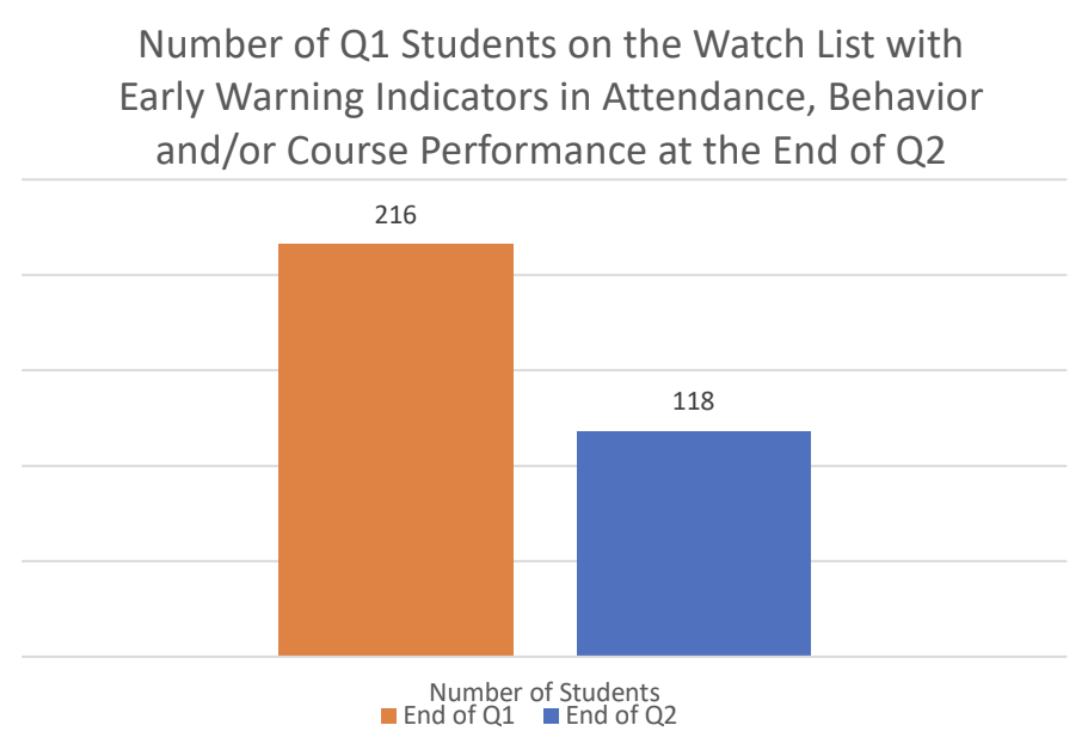
By the end of Quarter 1, West McDowell’s Watch List had grown to 218 students. The team of four teacher-leaders who were working with Schools That Lead —saw an opportunity: what if every adult in the building adopted just one student from the list?
In a November full faculty meeting, these four teacher leaders shared research on Early Warning Indicators (EWIs), which are measurable signs—such as poor attendance, declining grades, or behavioral concerns—that signal a student may be off-track for on-time graduation. EWIs help schools identify students who need additional support before academic or engagement issues become more serious, and form the basis for watch lists. Next, the teacher leaders invited staff to picture one of their students they believed might be struggling. Then the teacher leaders revealed the actual watch lists – naming which student was on which list(s). The reaction from the faculty was immediate—a collective gasp, followed by a wave of compassion and urgency.
“This isn’t one more thing,” Brian told the faculty. “It’s about caring for the students we already know.”
Staff were invited to adopt one or more students—completely voluntarily. Most chose students they already taught or had known in previous years. Everyone was included: teachers, assistants, front office staff, even the librarian. There were no mandates, no paperwork, no prescribed methods—just a shared commitment to connect with the students on the watch lists.
What Adoption Looked Like
Each adult chose their own approach:
Weekly grade and attendance check-ins
Goal setting and follow-ups
Incentives and positive reinforcement
Tutoring during lunch
A quiet space to work
A listening ear and a steady presence
“One student told me, ‘I’ve never been chosen for anything,’” shared a teacher. “That sense of worth changed everything.”
Impact by the Numbers
Process Measures
100% of Watch List students were adopted
88% of staff opted in voluntarily
Counselors ensured every student had at least one adult connection
Outcome Measures
By the end of Quarter 2, 45% of Watch List students no longer met Early Warning thresholds.
Students showed improved behavior, attendance, and confidence
Staff reported stronger relationships and renewed purpose
Keys to Success
Led by teachers, not mandated from above
o Brian Krause: “This is only my fifth year of teaching. I am really just coming out of the Beginning Teacher program. This is the first time I have ever spoken in front of the faculty. I was nervous. I was concerned it would be ‘one more thing’ but we started with what they cared about – their students. We are here to make an impact. We believe THIS will make an impact.”
The principal let the teachers lead. “All I had to do was say yes,” said Principal Nakia Carson. “These go-getters built the plan—I simply supported it.” Notably, Principal Carson did not speak at the initial full faculty meeting.
Grounded in what people care about: kids
“Once people saw the data, they wanted in,” said teacher-leader Katy Copley. “There’s a lot of need—this gave us a way to respond.”
Reflections from the Field
Brian and his team asked a few teachers of their colleagues who participated two questions:
What did you do with your adopted students? Why do you think it worked?
• Teacher A: I met with students weekly about grades and attendance, set weekly goals, the reward system (incentives), positive reinforcement (this was the most important factor), and checked in at home. It worked because this student wanted and needed positive reinforcement, liked having a connection with an adult, and enjoyed rewards.
• Teacher B: I initially rewarded the student(s) for attendance, conducted weekly check-ins and gave them a space (my classroom) to work independently out of class. It worked because the student said, "I've never been chosen for anything." Liked incentives, liked the attention, made a connection, felt like they had a confidante.
• Teacher C: I did weekly check-ins, gave extra support to the students who are in my class. For those not in my class, they came in during their lunch for tutoring and support. It worked for my students because they got positive attention vs negative attention they usually got from teachers and liked 1-on-1 help.
The Takeaway
West McDowell’s journey shows how teacher leadership can have school-wide impact. In this case, a single practice—one adult checking in with one student—can grow into a school-wide culture of care. The Watch List didn’t become a burden. It became a beacon. And the message was clear: when students know they’re seen, supported, and chosen, they begin to believe in themselves again. And the message came from the people doing the work – the teachers.