Sherri Foreman is a middle school CTE teacher in Alamance-Burlington School System and a member of the inaugural Teacher Leader Alliance.
Getting Clear About the Problem
I realized that several kids in my class were falling behind academically, not because they lacked the ability to succeed, but because their assignments simply weren’t getting completed and turned in. Some were sleeping through lessons, others drifted off task, and small disruptions kept our learning momentum at a standstill. When I dug into the root causes, the pattern became clear: low motivation and low engagement were driving the behavior, and the behavior was driving the missing work. That insight became the foundation of my theory of change.
To address it, I created a small, testable change idea: a daily punch card system. Students could earn one punch each day by staying awake, completing classwork, and meeting behavior expectations. After five punches, they earned a small snack reward. It was simple, but it gave them something concrete to work toward.
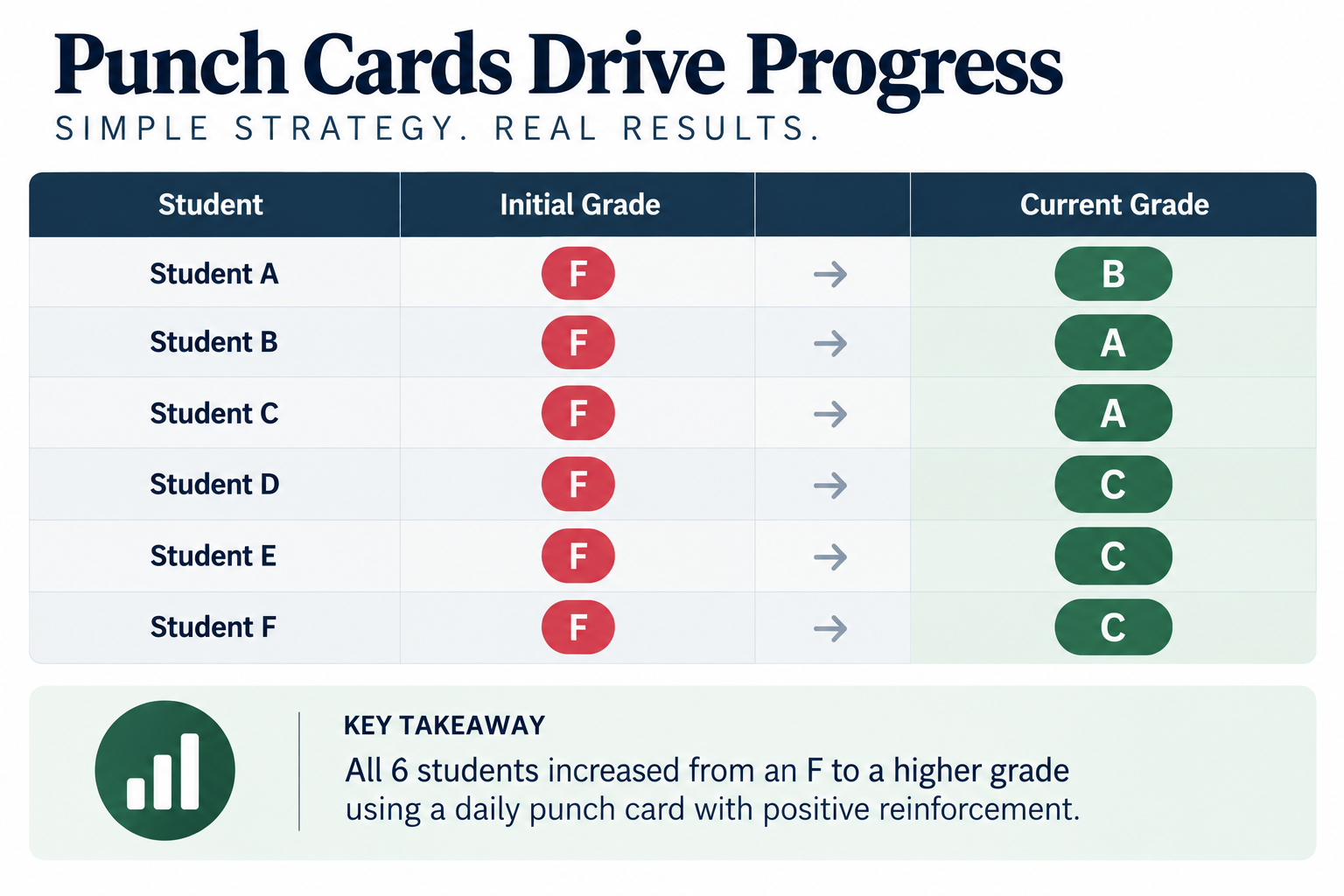
I tested the idea during regular class time with a small focus group of six students. Because I teach across different grade levels, this group spanned a wide developmental range. These students were navigating a variety of challenges, from high energy focus struggles and peer distractions to deep seated anger and transient living situations. Meeting expectations in a computer lab is a tough sell on a good day, but when motivation is low, it feels impossible. Yet, the shift happened almost instantly.
The Stories Behind the Screen
Right away, the majority of the focus group responded beautifully. Four of the students locked in quickly. One student who was easily distracted by his peers, the punch card acted like academic horse blinders; he transformed from being completely off task to finishing his assignments early. Another student who was easily tempted by classroom distractions saw a remarkable turnaround in both his behavior and academic performance.
The biggest surprise was a student who simply could not sit still and desperately disliked the monotony of keyboarding. Since starting the punch cards, their focus shifted so much that they went from an failing to a solid A.
The real wins weren’t just on the grade sheet; they were in the relationships.One student with high energy came to class with a history of frequent disciplinary referrals. Instead of bracing for an issue, I set firm boundaries, made it clear I believed in the student, and used the punch card to offer a little free time at the end of class. The student worked hard to earn it—and hasn’t received a single write-up in that classroom since they started.
Then there is another student who despite being incredibly bright and enrolled in advanced coursework, often struggled with self-doubt and questioned whether they belonged. The goal was simply to keep them engaged, in the classroom, and in school. Now, they make a point to check in each morning and say they’re going to have a good day. They’ve earned every punch and regularly express how much they care. It turns out, they needed a safe, consistent space where their worth and capability were recognized.
The Hurdles and Pivots
Of course, real life in a classroom is rarely a perfect success story. One student started strong, excited about the incentives, and improved their grade. Then things became difficult in other classes. They began getting in trouble across the building, missing class frequently, and arriving exhausted when they did attend. Their grade eventually dropped again.
Because the change was working initially, I decided to adapt rather than abandon the strategy. I kept the punch cards, but started tracking his behavior across classes and checking in when I noticed him struggling. I wanted him to know that my belief in him didn’t end when he walked out my door, I expected him to stay on track all day. The relationship that had been established allowed me to set this expectation and the student was receptive.
Looking Ahead
As I studied the results, the data matched what I was seeing: more work completion, fewer disruptions, and stronger engagement. Punch cards filled faster each week, while behavior incidents decreased.
For the next cycle, I’m asking colleagues across grade levels and subjects to test the punch card strategy in their own classrooms. By expanding the idea, we can learn whether a consistent, positive approach can support student growth throughout the entire school day.
The change was simple, measurable, and not a magic fix but it created small, achievable wins. Sometimes, we don’t need a massive overhaul to change a student’s trajectory. We just need to stack up small wins, one punch at a time.